Impacts from the annual Arctic 0.5°C increase continue to generate discussion and modelling within the Russian economic community. The researchers wanted to holistically assess the macroeconomic effects of climate change on the Russian economy, using the latest data.
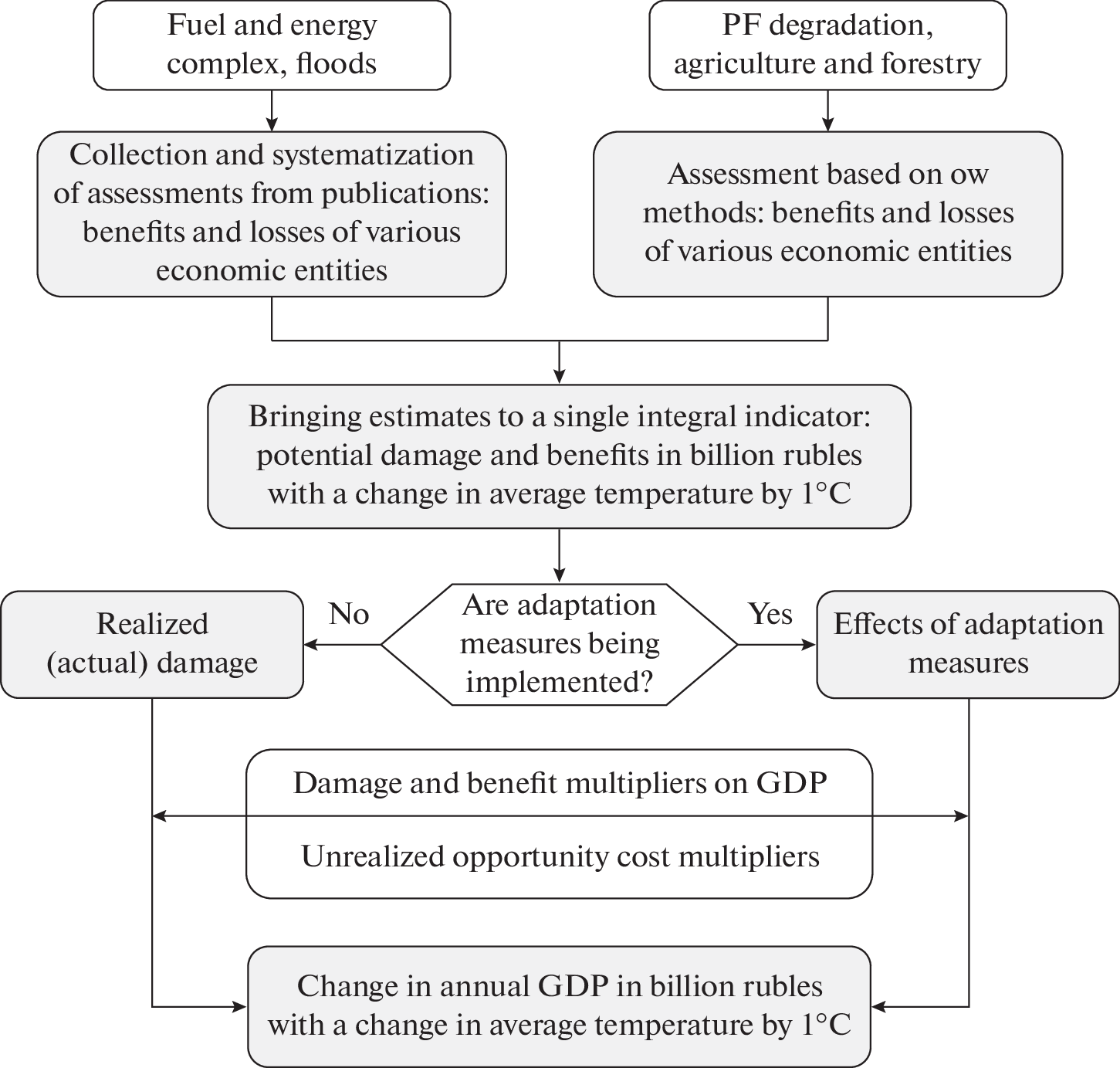
They used “a change in Russia’s annual GDP with an increase in the average annual temperature by 1°C within 20 years” for their unified predictive modelling. They reviewed adaptation measures developed or developing in response to climate risk e.g. permafrost degradation, wildfire increase, flooding increase; such as changes in infrastructure and construction and soil stabilisation. For fossil fuel and other chemical energy production they analysed decreases in equipment, power transmission stability, equipment heat and increase in electrified air conditioning consumption, amongst other effects.
Overall they estimated GDP reduction of 3 trillion rubles, based on data up to 2022. They note that the limitations of data sources, data measurement and modelling produce high uncertainty. They suggesting continue to review policies and implement adaptation efficiency initiatives that need to balance the quality of life, safety of the population alongside economic competitiveness.
Porfiriev, B.N., Kolpakov, A.Y., Eliseev, D.O. et al. Economic Effects of Climate Change in Russia. Stud. Russ. Econ. Dev. 36, 161–174 (2025). https://doi.org/10.1134/S1075700724700631

 Russian Climate Research