[Ed. for further exploration of the topic, Matvienko cites 23 research studies from the last fifteen years included at the end of his article]
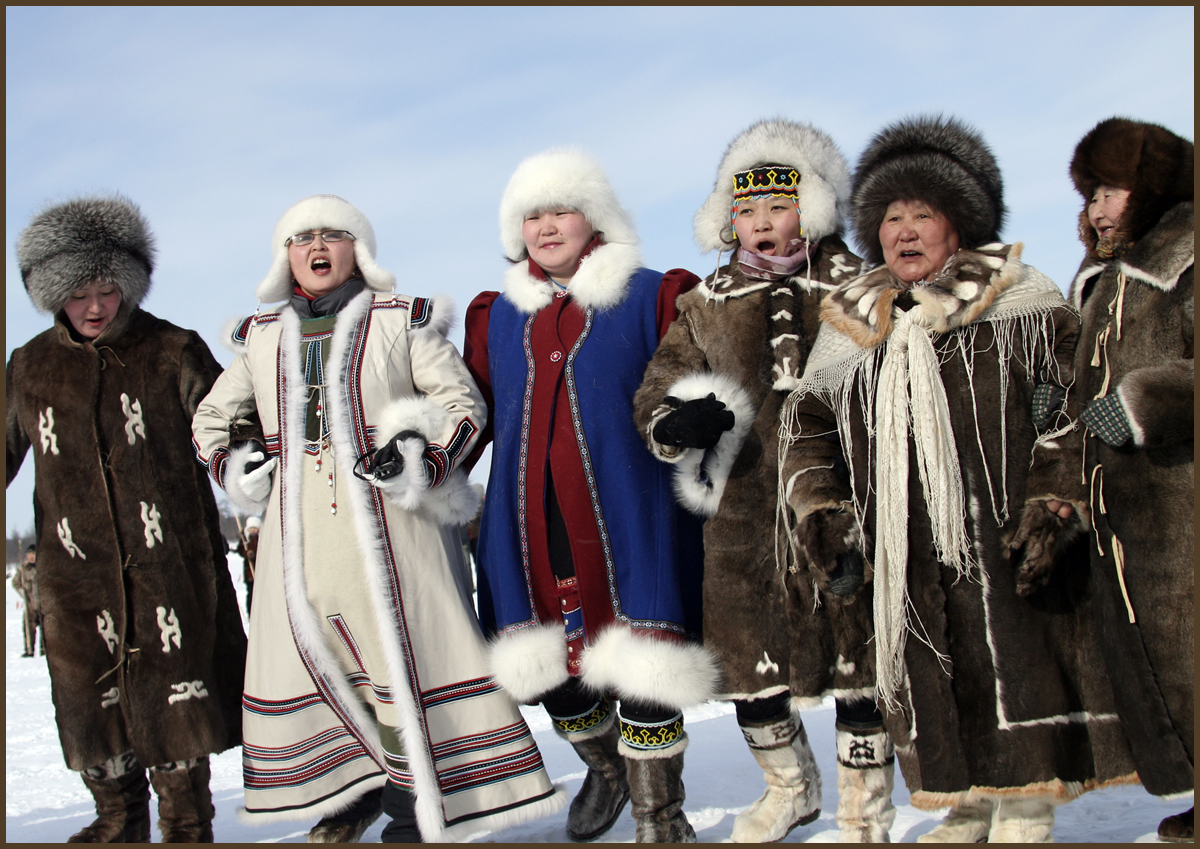
Roshydromet’s data shows that the average annual air temperature in the Russian Arctic has warmed faster than other parts of the world. (Matvienko, 2023), affecting indigenous (Nenet, Evenk, Chutki) populations. These have been decreasing, especially Yamalo-Nenets Autonomous Okrug, Nenets Autonomous Okrug, Republic of Sakha (Yakutia), Chukotka Autonomous Okrug and the Krasnoyarsk Krai.
Scientists are anticipating increases in transport and logistic challenges including traditional winter roads and crossings which had snow and ice cover, sea ice melt, permafrost melt and more extreme weather affecting air transport. Reduced transport affects access to food, threatening indigenous livelihoods. Changing migration routes negatively impacts wild plants with animal populations transversing or eating them.
Previous Russian studies of reindeer herding and populations found greater losses with unpredictable weather affecting calving, grazing and migration. This in turn affects availability of reindeer meat as a food source. Matvienko has also noted that seasonal changes are affecting fish and marine animal populations with overall catches reducing. Indigenous groups have special rights for traditional fishing but there are legislative challenges for commercial fishing affecting permit distribution.
Where indigenous groups in the Russian Arctic have historically accessed food sources such as reindeer and fish, reductions in these have affected their immune systems, increasing heart, respiratory and infectious diseases (Dorzheeva, Sleptsova & Yu in Matvienko, 2023). Generally they have lower life expectancy rates but access to medicines and personnel is affected by transport accessibility.
The researcher recommends
firstly, to develop laws, strategies and/or state programs for the protection of the indigenous peoples of the Russian Arctic, required to minimize the adverse effects of climate change by sectors (reindeer herding, fishing, hunting and gathering);
Matvienko, 2023, http://arcticandnorth.ru/article_index_years_eng.php?ELEMENT_ID=384580
secondly, to create a system for assessing the impact of climate change on the economic activity and health of the indigenous peoples of the North;
thirdly, to involve indigenous peoples in monitoring the state of the environment and implementing environmental projects in the Arctic.
Матвиенко, И.И., 2023. Current Problems of Indigenous Minorities of the Russian Arctic in the Context of Climate Change [EN], Арктика и Север, (52), pp.153-166, available at http://arcticandnorth.ru/article_index_years_eng.php?ELEMENT_ID=384580

 Russian Climate Research
