Some tourists don’t take the Transbaikal Siberian train. They fly in and like it so much they want to stay and mingle with the locals. But what do resident bees really think? Zoology researchers from Tomsk State University decided to find out.
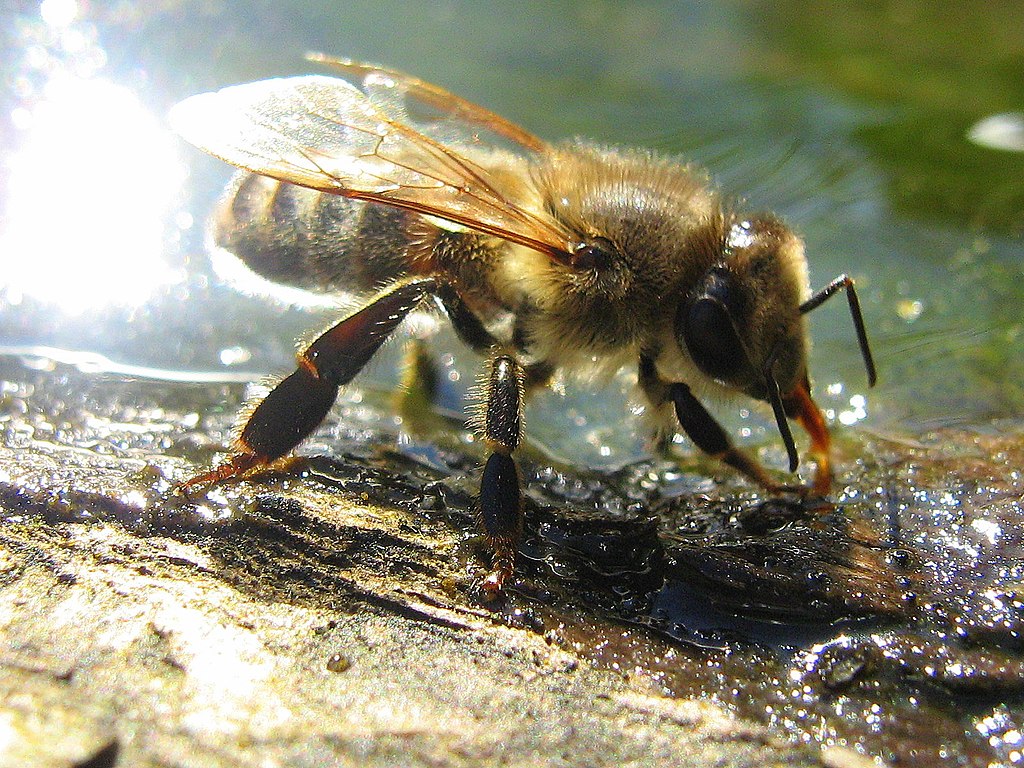
Bee threats are well researched – pests, pathogens, fertilisers, habitat destruction and Russian bees face similar challenges. The European bee subspecies ‘Apis mellifera mellifera‘ aka dark forest bee flew into Russia towards the end of the 19th century, settling in forests and forest steppe regions. Since then humans and bees have introduced a range of bee relatives and experimented with hybridisation for multi-bee honey production.
The researchers chose an isolated apiary in Tomsk taiga region and observed the bees between 2010-2022. The average temperature in January is −19.2 °C, and in July– +18.1 °C. They have over 400mm rainfall annually. Originally dark forest bees were in the apiary then ‘Apis mellifera carpathica‘ joined later, but some original colonies of dark forest bees remained. They studied 64 colonies, which included changing of queens to purebred around 2015-2016. They completed regular bee health inspections and census checks. They finally compared purebred vs hybrid, investigating biological, behavioural, and economic (honey productivity) traits; using statistical analysis to retrieve the results.
They found that colony strength improved when purebred queens were introduced into hybrid colonies. They recorded a correlation between spring colony strength and bee numbers after wintering. House cleaning habits by both purebred and hybrid were related to numbers of bee deaths. Both hybrid and purebreds laid similar egg volumes initially then purebreds overtook their hybrid relatives. Dark forest bees are generally more chilled out and more comfortable with colder weather than their hybrid relatives:
Dark forest bee colonies were strong, overwintering ability, disease resistance, and highly productive. On the contrary, a low overwintering ability and a slower spring development as well as weak disease resistance, indicate a lack of adaptation of hybrid colonies to environmental factors in Siberia. Local honeybees are better adapted to local environmental factors such as vegetation, flowering patterns, and climate change, as well as local beekeeping methods.
Ostroverkhova et al, 2024
The dark forest bee is endanged in Europe and the researchers believe that the preservation of their species in Siberia is essential for European bee conservation especially as the Siberian climate continues to warm up.
Ostroverkhova NV, Rosseykina SA, Yaltonskaya IA, Filinov MS. 2024. Estimates of the vitality and performances of Apis mellifera mellifera and hybrid honey bee colonies in Siberia: a 13-year study. PeerJ 12:e17354 https://doi.org/10.7717/peerj.17354

 Russian Climate Research