Volcanoes, the Earth’s natural drama queens, have been getting chattier of late, especially in Kamchatka. The peninsula has 30 volcanoes and is one of the most volcanically active regions in the world. Klyuchevskoy has had a lot to say this week..
Unsurprisingly Russian volcanologists were already on the case, monitoring ash emissions, temperatures and explosive eruptions. There have been more than 80 eruptions since 2000. Sometimes eruptions last a few hours, days or in some cases decades. The scientists decided to compare the volcanoes based on a mix of remote sensing and observations, looking at thermal anomalies.
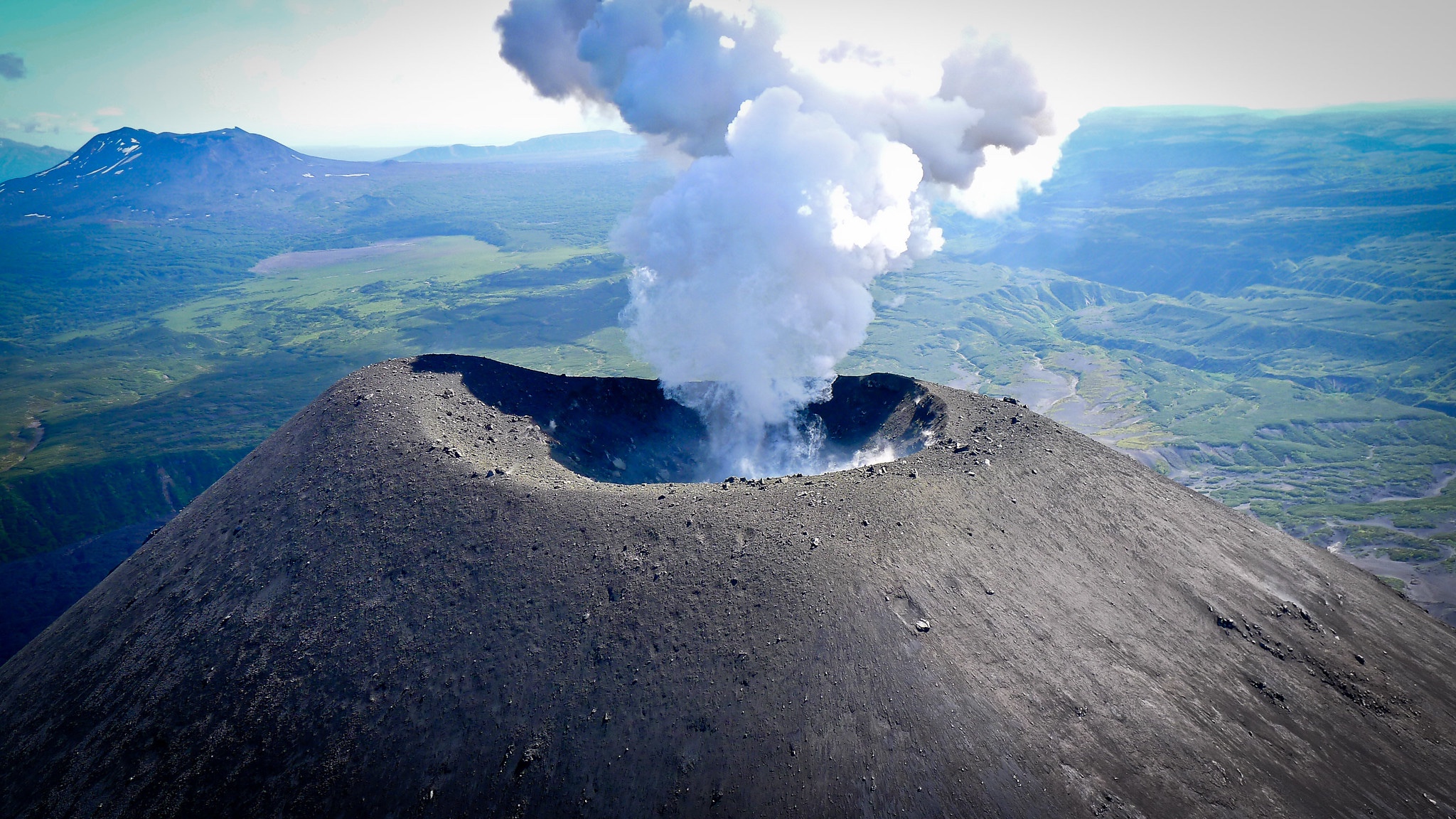
Northern Kamchatka volcanoes are more active than their southern counterparts with explosions varying from combining multiple lava flows or pouring lava down the volcanic domes. As the magma reaches the earth’s surface, it reaches higher temperatures and erupts from both basaltic and basaltic andesite rock based volcanoes.
Remote sensing using satellite data has been recording data from Kamchatka’s volcanoes, using international satellite data and national data from the VolSatView system of the Russian Academy of Sciences Space research Institute. It has has APIs to connect to other data sources such as weather and spatial information systems. They also used data from the visual information system KVERT which has provided camera data since 2000.
They searched the databases for thermal anomalies and the eruption patterns. They found continuous eruptions from Sheveluch between 2015 and 2022 except a quiet period between February and November 2018. Kluchevskoy had five major eruptions between 2015 and 2022, Karimsky had eruptions on and off during the same time period. Ash eruptions had higher temperatures. They found a correlation between the younger magma that reached the earth’s surface and the highest temperatures of the thermal anomalies between 102ºC and 132ºC.
Girina, O., Manevich, A., Loupian, E., Uvarov, I., Korolev, S., Sorokin, A., Romanova, I., Kramareva, L. and Burtsev, M., 2023. Monitoring the Thermal Activity of Kamchatkan Volcanoes during 2015–2022 Using Remote Sensing. Remote Sensing, [online] 15(19), p.4775. https://doi.org/10.3390/rs15194775.

 Russian Climate Research