Heavy metal pollution in Peter the Great Bay and Lake Khanka affects both biological organisms and accumulating in bottom sediments (BS) of both freshwater and seawater. Russian chemists ecided to find out more about the impact on the surrounding ecology by analysing each heavy metal phase, how it appears, what it does and where it goes. Heavy metals are often present in polluted water.
They explored the inland water basins of Ussuri and Amur bays, the most polluted bays in the north east of Peter the Great Bay. They cover approximately 50-60km coastline and maximum water depth of 50-60m. Nearby Vladivostok city uses the waters as well as fishing, tourism and other industries. Heavy metals also emerge from wastewater discharge, around 52% in Peter the Great Bay according to state statistics1.
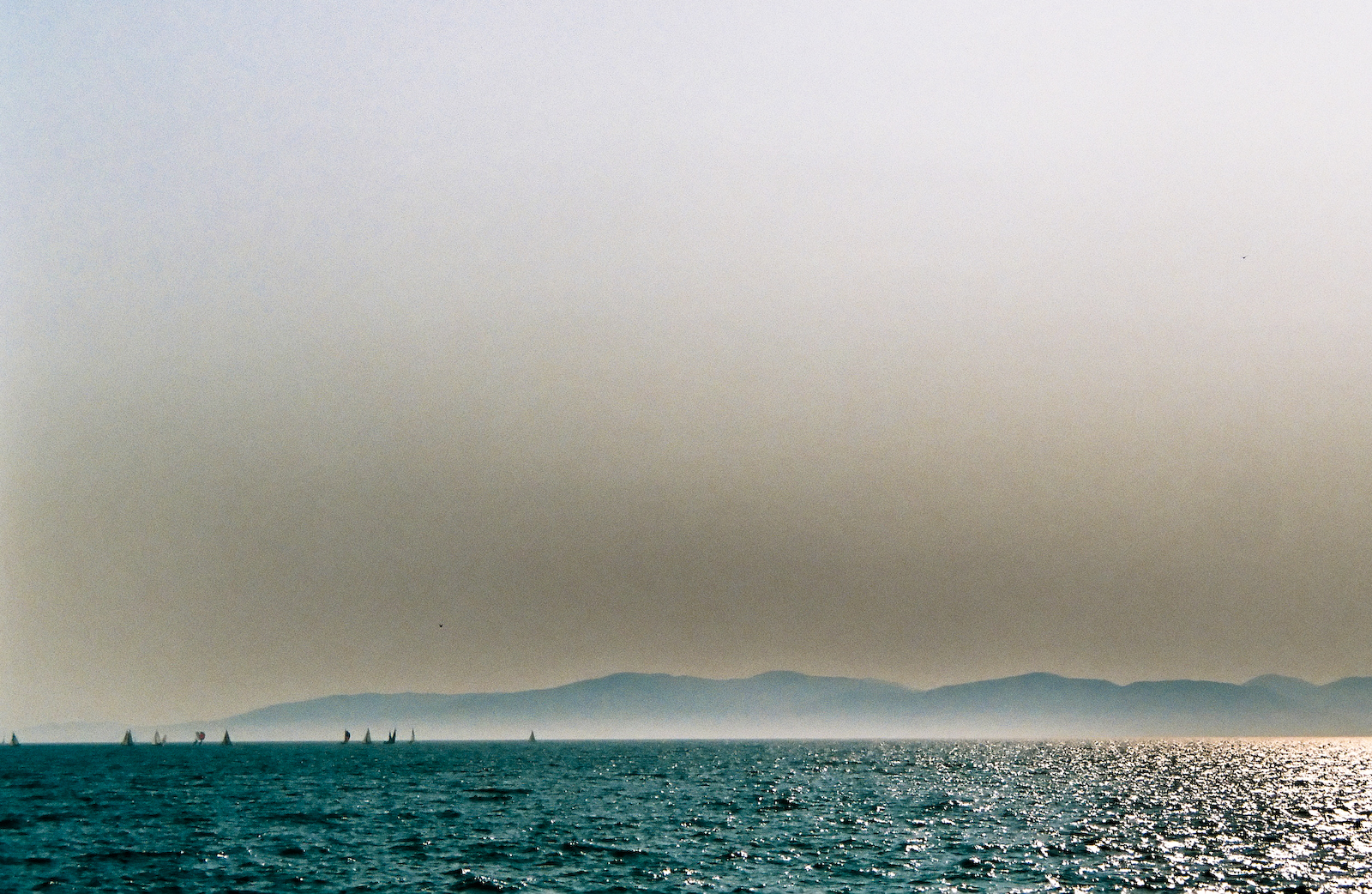
As industry increased during the 1990s, the water became more polluted then during 2000s until 2012, the volume of heavy metals decreased. Copper and zinc have continued to increase whilst manganese, nickel and lead have retained similar levels to 2012. Monsoon and typhoons affect the distribution and types of sediments, plants and fish.
For freshwater, they chose Lake Khanka near the borders of both Russia and China, fed by 15 Russian rivers and 8 Chinese rivers. Anthropogenic activities affect the water quality such as agricultural, transport or industrial run-off flowing into the lake, wind erosion from cultivated soils, wastewater discharge. Common heavy metals found were aluminium and iron but also chromium, cobalt, nickel, copper, zinc, lead, arsenic and cadmium.
They took water samples from Peter the Great bay, then water and soil samples from Lake Khanka between June 2021 and October 2022. The samples were sent to labs for analysis where they used spectrometry to analyse the elements and X-ray diffraction to analyse the composition of the BS. BS concentrations in the water samples were also analysed using atomic absorption spectroscopy. Radioactivity analysis was completed via Lomonsov Moscow State University. They developed a constant flow rate model to determine the age of the BS.
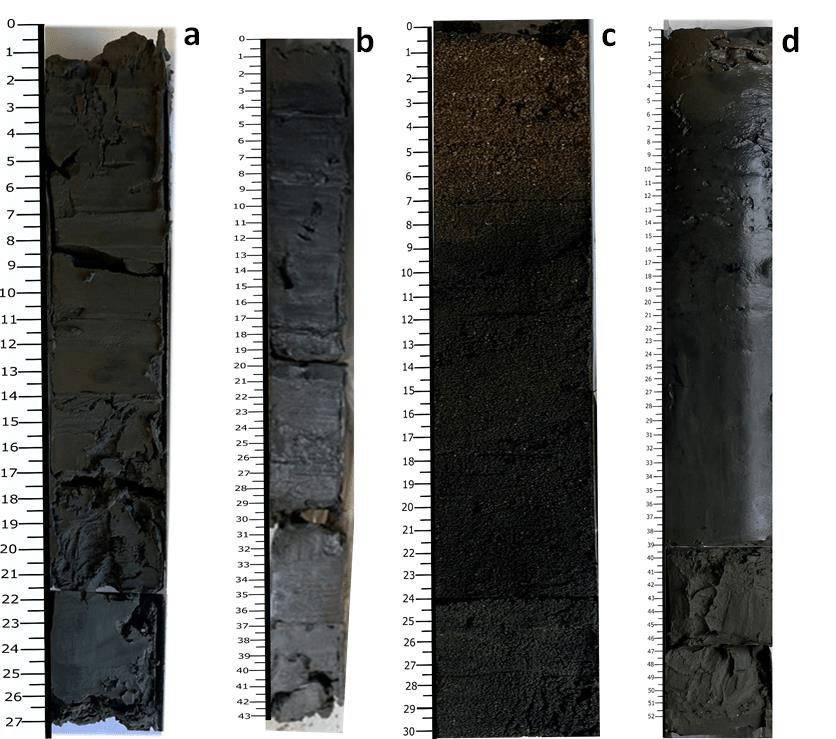
(b,f) BS-2; (c,g) BS-3; (d,h) BS-4; Tokar et al (2023)
They found correlations between the distribution of heavy metals, particularly iron and copper in seawater and manganese in freshwater within BS composition in Peter the Great bay and Lake Khanka respectively. They also found that as pH increased in both water types, migration decreased for chromium, nickel, copper, zinc and lead. BS in both areas contained higher volumes of lead, with lower volumes of chromium, nickel and zinc. Run-off into the estuaries is believed to be a major contributor to iron and manganese for both water basins.
Tokar’, E.; Kuzmenkova, N.; Rozhkova, A.; Egorin, A.; Shlyk, D.; Shi, K.; Hou, X.; Kalmykov, S. Migration Features and Regularities of Heavy Metals Transformation in Fresh and Marine Ecosystems (Peter the Great Bay and Lake Khanka). Water 2023, 15, 2267. https://doi.org/10.3390/w15122267
- Unified State System of Information on the Situation in the World Ocean (ESIMO), available at http://ias.ocean.ru/esimo/data_online_period_eng.jsp

 Russian Climate Research