Ice is one of the leading causes of damage to infrastructure from water factors including flooding, ice blockages and hanging ice:
In 2020, The Russian Federal Service for Hydrometeorology and Environmental Monitoring (Roshydromet) recorded 1,000 dangerous hydrometeorological phenomena in Russia (97 phenomena more than in 2019), of which 372 phenomena caused significant damage to critical infrastructure
Kozlov et al., (2023)
These have affected both urban and rural areas with changing water levels across rivers, seasonally affected by the freezing structures of ice in the water. These are studied but engineers want to find out more about the causes and features so they can develop models to predict the impact as well as the structures and formations of the ice itself.
The researchers looked at historical ice trends including the seasonal changes in the mouth of the Northern Dvina river, the monitoring of the Volga river basin below the Rybinsk hydroelectric complex, and the national classifications used to identify ice phenomena and their behaviour. They reviewed existing hydrological research and modelling of water flow and velocity on a section of the Volga river.
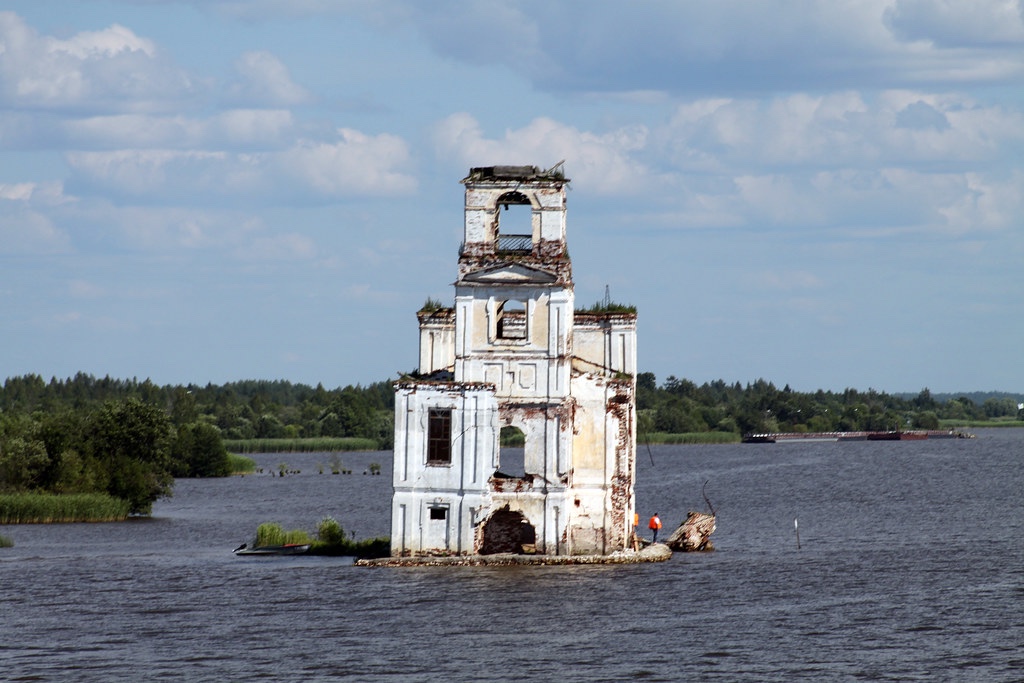
Data about ice formation has been recorded in some formats since the middle of the 18th century for Russia rivers, including snow melt, ice structures, water levels and meteorological impact such as wind. More recent recordings of air surface temperatures have shown that ice freezing occurs later and ice break up occurs earlier. The researchers used Roshydromet data between 1991 to 2019 to input into hydrological modelling. They also reviewed observations from Federal Water and Emergency Ministries and agencies regarding catastrophic flooding or similar events in the upper Volga basin.
They looked at the frequency of damage caused by ice across Russia and divided into clusters according to types of dangerous hydrological phenomenon and impact on the resident populations. They used the recent construction of a bridge over the Volga river to develop and test their hydrological models. This produced a potential ice blockage of up to ten kilometres. However they think that ice cutters could reduce the impact based on warmer temperatures recorded in 2022 compared with 2021 data.
They recommend obtaining and using both qualitative and quantitative data for future monitoring of impacts caused by climate change on the infrastructures and residents in the surrounding territory to continually improve accuracy and predict both human as well as hydrological behaviour.
Kozlov, D.V., Dzhumagulova, N.T. Engineering hydrology technologies to reduce threats from ice phenomena. Magazine of Civil Engineering. 2023. 120(4). Article no. 12001. DOI: 10.34910/MCE.120.1

 Russian Climate Research